STOP Doing SIBO Breath Tests!
Aug 06, 2026If you have been struggling with chronic bloating and distention, gas, abdominal pain, or unpredictable bowel habits, there is a very high probability you’ve been given the blanket label of IBS. Some practitioners take it a step further and label it SIBO (Small Intestinal Bacterial Overgrowth).
And if you’re like millions of frustrated healthcare consumers, you’ve probably jumped on the SIBO hamster wheel:
-
You may have bought a 30-day herbal killing protocol.
-
You may have spent a small fortune on heavy-duty GI antibiotics like Rifaximin.
-
Or maybe you half-starved yourself on a strict low-FODMAP diet.
At maybe first, it feels like a miracle! The bloating vanishes, your stomach goes flat, and you think, "Finally, I found the cure."
Then, two to four weeks later, you start reintroducing foods—a little broccoli, an apple, or some sweet potatoes—and BOOM. The bloating comes roaring back with a vengeance. Your stomach distends, the brain fog returns, and your practitioner tells you: "Oh, you just didn't kill the bugs long enough” or “We need a stronger herbal protocol."
Before you burn down your gut lining with another round of antimicrobials, let's dissect what peer-reviewed clinical guidelines actually support regarding SIBO, IMO, and ISO.
CORE CONCEPT 1: NOT ALL "SIBO" IS THE SAME
To understand why gut overgrowth protocols fail, we need to establish two fundamental clinical distinctions up front.
1. Biochemical Individuality & Root Mechanism
Not all SIBO is the same in terms of cause, severity, or downstream consequences.
-
Person A acquires SIBO after a severe bout of food poisoning or acute gastroenteritis. This puts them into an infectious/autoimmune model. They may have severe dietary limitations and require a strict low-FODMAP protocol for a longer period.
-
Person B develops SIBO after a concussion or traumatic brain injury. This puts them into a neurological/motility model. They may have far fewer dietary restrictions than Person A.
If a practitioner tries to manage both clients with the exact same canned protocol without accounting for the underlying mechanism, one of those clients is going to fail. In Functional Medicine, biochemical individuality dictates that canned, template protocols have a far lower success rate than strategies crafted for your specific biochemistry.
2. The Shift to "Disorders of Gut-Brain Interaction"
Science has moved away from using the singular label of "SIBO" to explain abdominal bloating after eating sugars, starches, and fibers.
In the past, docs used the broad term Functional Gastrointestinal Disorder. Today, the official clinical language has updated to Disorders of Gut-Brain Interaction.
The letters S-I-B-O designate two things:
-
Location: Small Intestine.
-
Organism: Bacteria.
We previously lumped conditions that were not bacterial and not located in the small intestine under the same umbrella because they presented with identical symptoms. Some cases weren't bacterial at all, but fungal (SIFO - Small Intestinal Fungal Overgrowth).
Current science breaks down these gut-brain interaction disorders into three distinct microbial phenotypes:
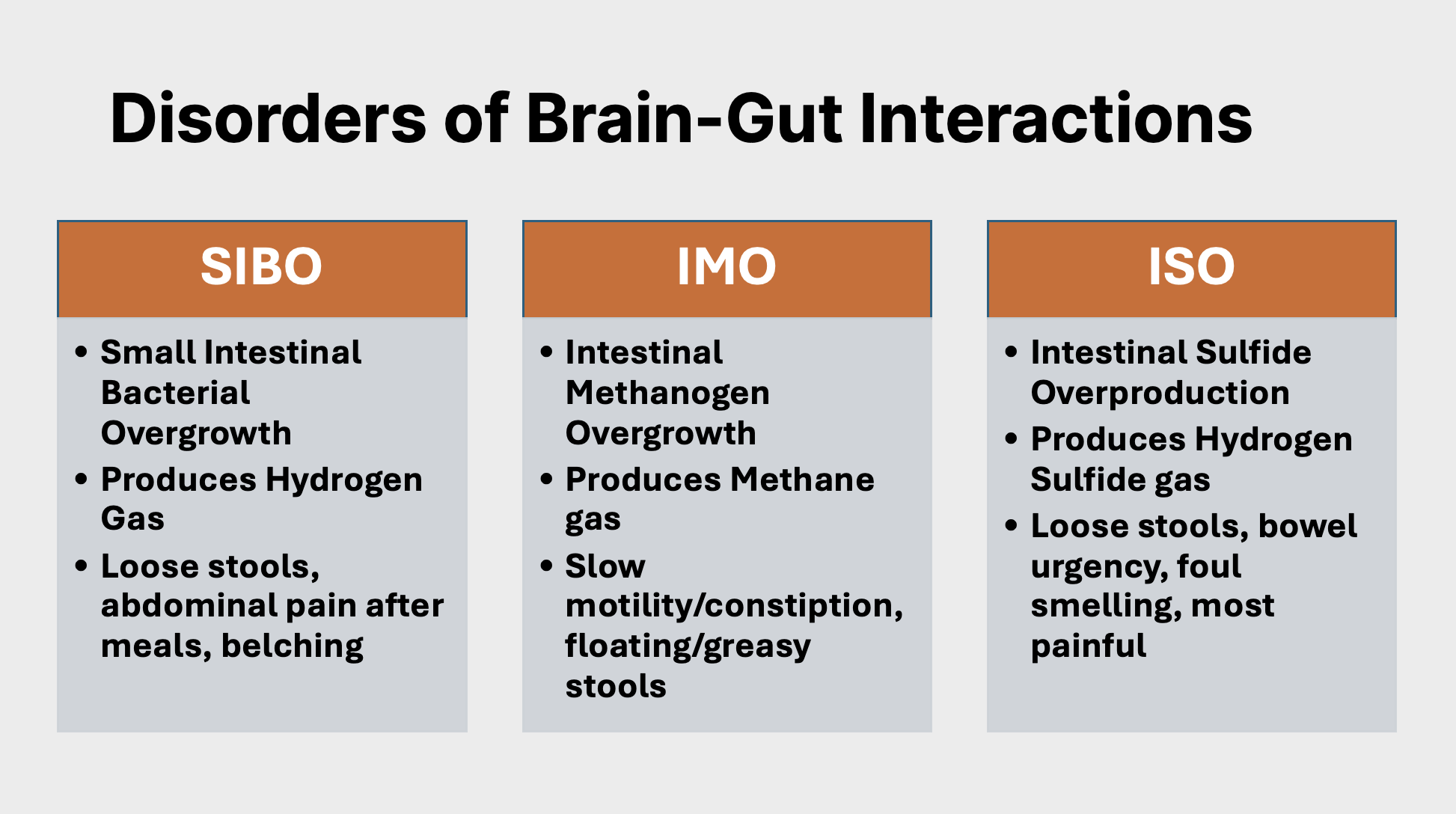
Phenotype 1: SIBO Proper (Hydrogen-Dominant)
-
Target: True bacterial overgrowth confined strictly to the small intestine.
-
Mechanism: Bacteria feed off fermentable sugars, starches, and fibers, fermenting them into Hydrogen ($H_2$) gas.
-
Symptom Pattern: Associated with loose stools, frank diarrhea, abdominal pain right after eating, and belching.
Phenotype 2: IMO — Intestinal Methanogen Overgrowth
-
Target: Archaea (Methanobrevibacter smithii), which are single-celled organisms that are physiologically distinct from bacteria.
-
Location: Methanogens can live anywhere in the GI tract, but colonize primarily in the distal large intestine and colon—not the small intestine.
-
Symptom Pattern: Methane slows gut transit time. The dominant presentation is a sluggish gut, severe constipation, and floating/greasy stools.
-
Why Standard Protocols Fail: Standard antibiotics and herbal SIBO protocols fail for IMO because Archaea are not bacteria.
Phenotype 3: ISO — Intestinal Sulfide Overproduction
-
Target: Sulfide-producing microbes that consume hydrogen and methane as fuel.
-
Mechanism: Generates Hydrogen Sulfide (H2S) gas.
-
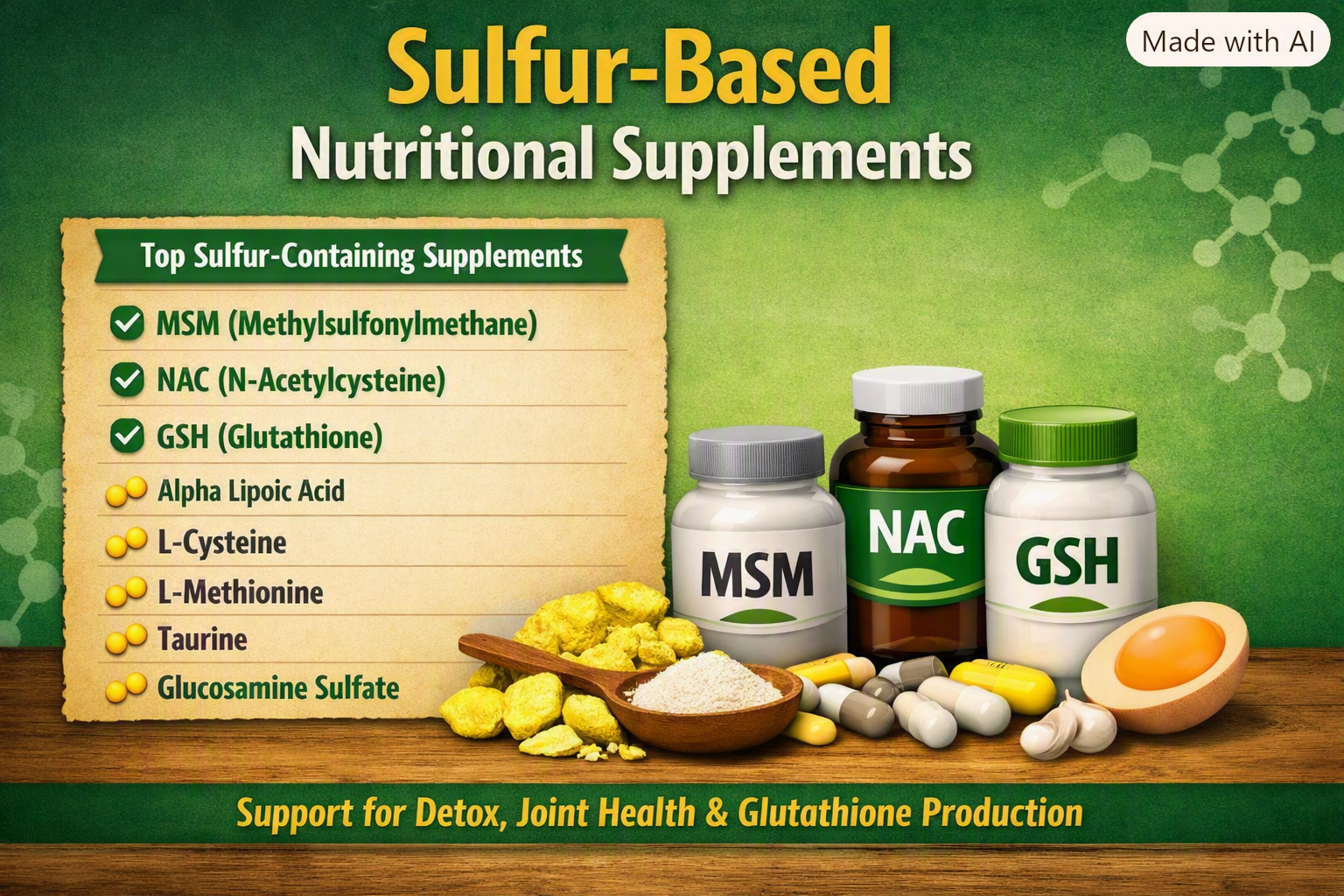
Symptom Pattern: Characterized by diarrhea, severe abdominal pain, bowel urgency, and a distinct foul/sulfurous odor. Symptoms often worsen on high-protein diets or sulfur-containing supplements (like MSM, NAC, or Glutathione).
CORE CONCEPT 2: WHY THE SIBO BREATH TEST OFTEN LIES
Stool tests cannot diagnose small intestinal overgrowth, which led to the development of the SIBO breath test. However, clinical breath testing is fraught with challenges that severely limit its diagnostic clarity.
1. Substrate & Gas Limitations
-
Missing Gases: Many commercial labs only test for two gases (Hydrogen and Methane). If you have an ISO (Hydrogen Sulfide) issue, a 2-gas test will miss it entirely.
-
Glucose vs. Lactulose: Glucose is absorbed rapidly in the upper small intestine, making it decent for catching true SIBO, but useless for finding colonic IMO. Lactulose travels the entire length of the GI tract without being fully absorbed, meaning it cannot distinguish whether gas was produced in the small intestine or the large intestine.
2. The Transit Time Confound
To guess where gas is produced, labs look at when the gas rises relative to your baseline sample. The assumption is that an early rise equals small intestinal overgrowth.
However, these tests assume everyone has the exact same gut transit time. If a patient has rapid transit, the sugary solution hits the colon early, producing a rapid gas spike that looks like SIBO on paper, when it is actually normal colonic fermentation. Conversely, slow transit or constipation hides gas spikes.
3. Gas Migration Mechanics
Gas produced in your gut does not travel backwards up your esophagus and out your mouth.
Your GI system is separated by one-way muscular valves (sphincters). Gas gets into your breath via vascular diffusion:
-
Microbes produce gas in the gut lumen.
-
The gas diffuses across the intestinal lining into your bloodstream.
-
Blood carries the gas to your lungs, where it is exhaled.
4. Low Statistical Sensitivity (The 50% Error Rate)
None of the cutoff values for breath test gases have been validated against the gold standard of direct small-bowel aspirate cultures.
A meta-analysis published in the Journal of Neurogastroenterology highlighted that SIBO breath tests suffer from exceptionally low statistical sensitivity.
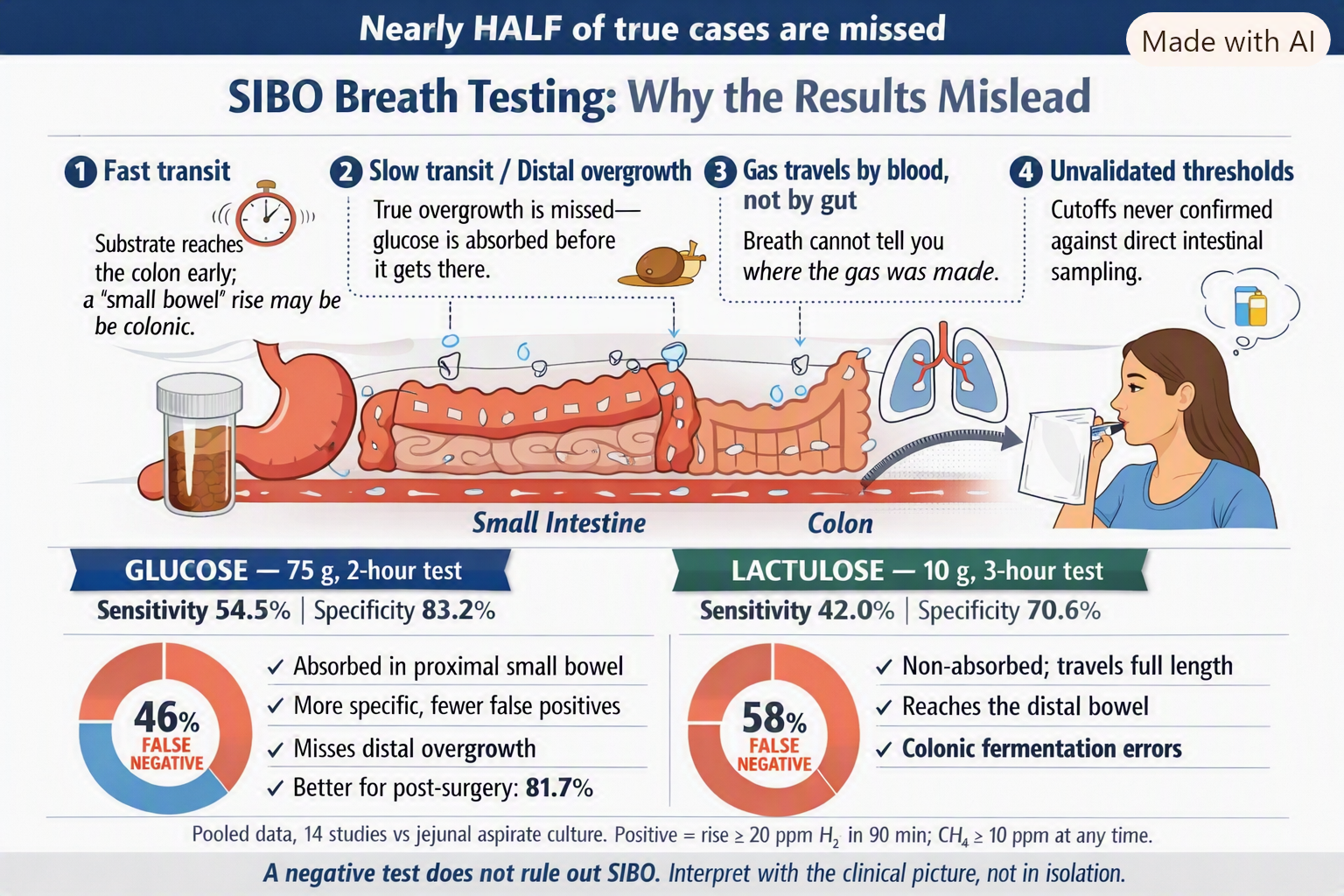
Clinical Reality Check: On average, a negative SIBO breath test is wrong about 50% of the time. If your breath test is positive, it offers some direction (though it can't verify exact location). If it is negative, it cannot be trusted to rule out an issue.
THE HOST SOLUTION OVER CANNED PROTOCOLS
There is no universal, one-size-fits-all "SIBO protocol."
The next time you see an internet influencer promoting a single supplement or probiotic that "cured their SIBO," understand that their biochemistry is not yours. Whether your issue is bacterial or archaeal, whether gas is generated in the small bowel or colon, and how your personal transit time interacts with diet must all be accounted for.
Crafting wellness requires moving beyond disease labels and canned protocols. It requires identifying your unique Root Cause Disruptors, evaluating your foundational metabolic systems, and executing a structured, personalized health journey.
WORK DIRECTLY WITH DR. NOSEWORTHY
I run my practice on a strict low-volume, high-engagement clinical model. I do not use cookie-cutter templates, and I do not farm your care out to health coaches or uncredentialed staff members.
When you work with me, you deal with me directly, 1-on-1. Everything from your functional diagnostic plan to your diet, exercise, and targeted nutritional strategy is customized to your physiology.
Ready to stop the SIBO hamster wheel and fix the actual root cause mechanisms driving your symptoms?
👉
Want to schedule a consult? Are you ready to start taking charge of your health and get this thing figured out? Everything start with a 1-hour consult to see if I can help and to make sure we're a good fit.
Stay connected with news and updates!
Join our mailing list to receive the latest news and updates from our team.
Don't worry, your information will not be shared.
We hate SPAM. We will never sell your information, for any reason.